Frederick Douglass and the Speech Liberals Forgot
"Composite Nation" reveals the confident democratic patriotism that once powered America’s greatest reformers and that Democrats urgently need to rediscover.

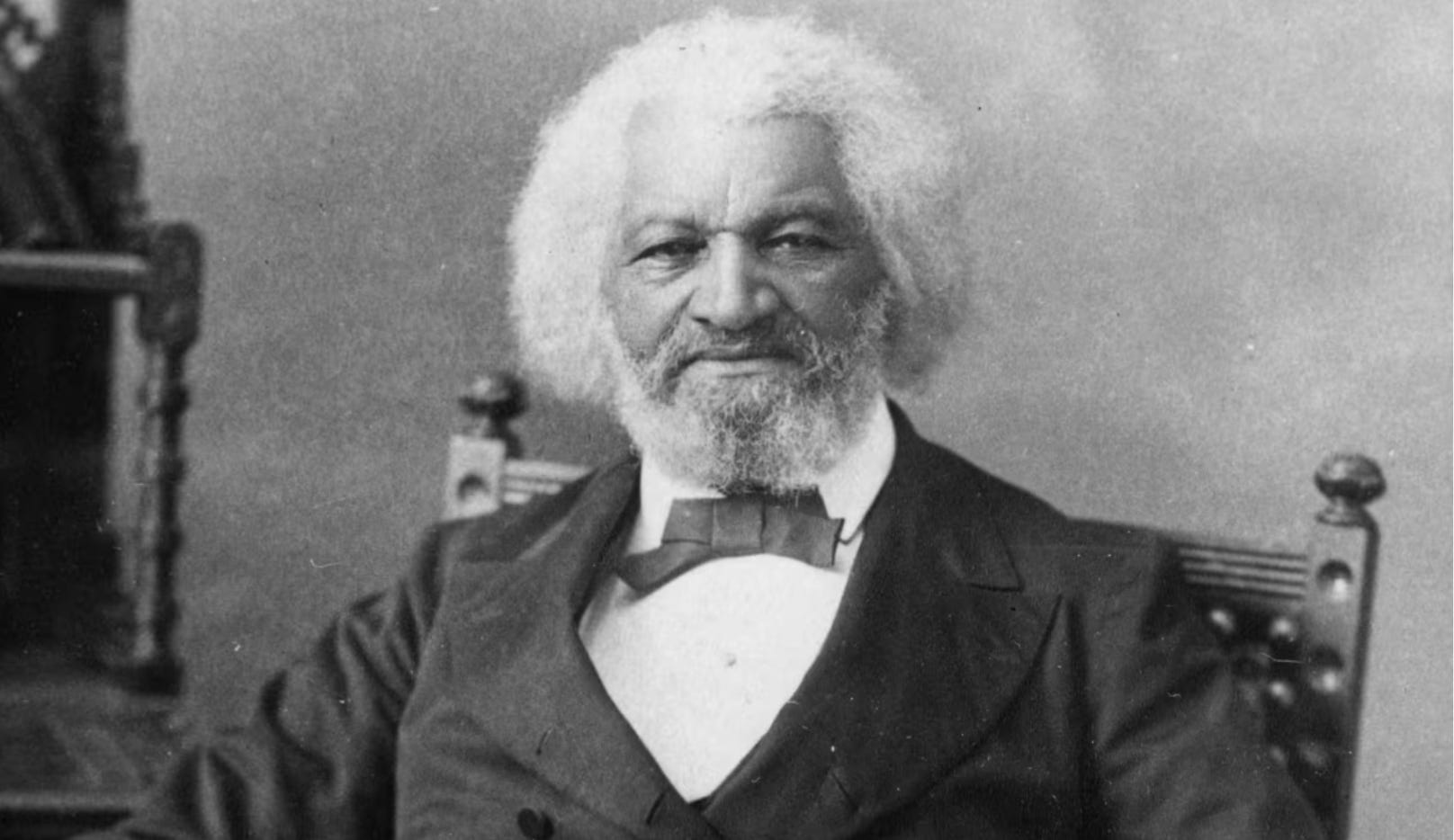
The Original Democracy Hawk
If liberals want to learn how to defend democracy again, we should start by studying how Frederick Douglass fought for it.
The titans of liberal democracy, including Douglass, Abraham Lincoln, Franklin D. Roosevelt, John F. Kennedy, and Martin Luther King Jr. spoke with confidence about the nation’s mission, embraced patriotism, confronted their enemies head on, and projected moral clarity and optimism about the democratic project.
They treated democracy not as something fragile and weak but as strong, righteous, and worth fighting for, despite its flaws. They treated Americans not as victims needing rescue, but as citizens with agency, absolutely capable of building a great nation together.
In other words, they instinctively practiced what we call Democracy Hawk principles.
No figure embodies these ideas more powerfully than Frederick Douglass. And yet the speech that embodies his most powerful vision for the country, and the one that speaks most directly to the world we find ourselves in today, is barely taught, rarely mentioned, and almost never referred to by liberals when we need it the most.
The speech is called Composite Nation. He delivered it as he traveled across the country in the years after the Civil War. This speech could and should be the liberals’ north star.
Beyond the Slave Narrative
America has never produced a mind quite like Frederick Douglass, or a more powerful defender of what democracy is supposed to mean. He was born into slavery and went on to become perhaps the most eloquent voice for American ideals the country has ever had. He taught himself to read in secret, hiding from the people who claimed to own him. Out of that stolen education came one of the most remarkable literary and political voices in American history.
Douglass dismantled his critics not with anger alone, but with the sheer force of his intellect, his refusal to defer to comfortable opinion, and his rare gift for calling out the best in people. Nothing he suffered, and nothing inflicted on Black Americans around him, could kill his belief in what this country could be.
His patriotism, fierce, clear-eyed, and pointed toward the future, is exactly the kind that many liberals today find hard to put into words.
Most people meet Douglass through his 1845 memoir, Narrative of the Life of Frederick Douglass, an American Slave, written when he was just twenty-seven. It’s a masterpiece. Some also know “What, to the Slave, Is the Fourth of July?” which is his 1852 speech that cut straight to the hypocrisy of a nation celebrating liberty while practicing bondage.
Both works rank among the most searing indictments of slavery ever written. But they only tell part of the story.
No one had attacked America’s betrayal of Black freedom more fiercely than Douglass did during the years of slavery. But when the Civil War ended, he didn’t give up on the country. He became one of the most serious architects of the American national idea the country has ever seen. After everything he and his people went through, he didn’t turn inward or bitter. He did something much harder: he kept believing, and he kept building.
That larger vision comes through most clearly in Composite Nation, one of the most profound speeches ever given about the future of American democracy. It should be required reading in every high school in this country.
Almost no one has heard of it.
The Nation as a Force for Justice, Liberty, and Progress
Douglass delivered Composite Nation across the country in the years following the Civil War, at a moment when large parts of the South still lay in ruins, when formerly enslaved Americans were being re-subjugated through debt peonage and convict leasing, and when the average American life expectancy was 35 years.
He was not speaking from comfort. He was speaking from the rubble.
Douglass begins his speech with a powerful reflection on the role of nations in human progress. The very act of organizing a people into a national body, he argues, represents a leap from chaos to civilization.
The simple organization of a people into a National body… marks the point of departure of a people from the darkness and chaos of unbridled barbarism to the wholesome restraints of public law and society.
This is a strikingly bold statement of democratic nationalism.
For Douglass, the nation is not something to apologize for. It is one of humanity’s greatest achievements, an organized form of human cooperation capable of producing justice, liberty, and progress.
That confidence in the nation itself is a hallmark of Democracy Hawk thinking.
America’s Unfinished Ascent
Douglass then turns to the United States.
Despite the devastation of the Civil War, he believed the nation’s greatest days still lay ahead.
Other nations have had their day of greatness and glory; we are yet to have our day, and that day is coming.
He had earned the right to say something very different. He didn’t. That choice was not naivety. It was strategy. It was conviction.
While older nations had exhausted their potential, America was only beginning its ascent.
The dawn is already upon us. It is bright and full of promise.
At the time Douglass delivered these words, large parts of the country still lay in ashes. Former slaves labored under systems that resembled re-enslavement, debt peonage and convict leasing.
He had nothing but contempt for those who viewed America’s trajectory as one of inevitable decline, who converted every unresolved injustice into proof that the whole project was rotten. He called them out by name:
The first are those who are croakers by nature—the men who have a taste for funerals, and especially National funerals. They never see the bright side of anything and probably never will.
During the Civil War, he reminded audiences, the air had been full of predictions about what the nation would never achieve.
The air was full of nevers… every one of which was contradicted and put to shame by the result.
Douglass believed the pessimists of his own time would be proven wrong as well.
Moral Challenges We Must Overcome
Douglass was not dismissing real problems. He catalogued them with unflinching honesty, the racism, the corruption, the “dangerous seeds of discontent and hatred” planted in the hearts of Black and Indigenous Americans by a government that refused to treat them as full members of the body politic.
But Douglass believed these injustices did not doom the American experiment. Instead, he believed they created a moral challenge the nation must overcome.
He wrote:
[Americans] have a right to be impatient and indignant at those among ourselves who turn the most hopeful portents into omens of disaster, and make themselves the ministers of despair when they should be those of hope.
Read that again. This is not a call to complacency. It is a call to fight, but to fight as someone who believes the fight can be won.
A Vision Larger Than Its Time
The central idea of Douglass’s speech was revolutionary for its time: America’s greatness would come not from ethnic homogeneity but from ethnic multiplicity.
He watched a new wave of immigrants arrive from China. He predicted it would reshape the nation.
Most Americans despised Chinese immigrants.
But Douglass refused to follow them.
Instead, he declared that Chinese immigrants should become full members of the American nation:
Would you have them naturalized… and invested with all the rights of American citizenship? I would.
Would you allow them to vote? I would.
Would you allow them to hold office? I would.
This was an extraordinary statement in the 1860s.
For Douglass, America’s destiny was to become a composite nation, a country strengthened by the contributions of people from across the world.
I want a home here not only for the negro, the mulatto and the Latin races; but I want the Asiatic to find a home here in the United States.
He saw welcoming the Chinese not as charity, but as the next step in the realization of America’s mission, a mission he described with more clarity and conviction than almost any politician since:
Our geographical position, our relation to the outside world, our fundamental principles of Government, world embracing in their scope and character, our vast resources… all conspire to one grand end, and that is to make us the most perfect national illustration of the unity and dignity of the human family, that the world has ever seen.
This is patriotism at its highest level: a confident nation leading the world by example.
The Nation He Imagined
The final passages of Composite Nation are among the most extraordinary in American oratory. He envisions a nation that has absorbed the world:
We shall spread the network of our science and civilization over all who seek their shelter whether from Asia, Africa, or the Isles of the sea. We shall mold them all, each after his kind, into Americans; Indian and Celt; negro and Saxon; Latin and Teuton; Mongolian and Caucasian; Jew and Gentile; all shall here bow to the same law, speak the same language, support the same Government, enjoy the same liberty, vibrate with the same national enthusiasm, and seek the same national ends.
These words show Douglass for what he truly was: one of the great architects of American democratic nationalism.
He understood something that many liberals today seem to have forgotten. Democracy cannot be defended with pessimism or apology about the nation itself. It must be championed with confidence, patriotism, moral clarity, and optimism about the future.
Douglass certainly embodied all of these qualities.
He concluded his speech with a vision that still resonates today.
If our action shall be in accordance with the principles of justice, liberty, and perfect human equality, no eloquence can adequately portray the greatness and grandeur of the future of the Republic.
The wings of the American eagle, Douglass insisted, were broad enough to shelter all who came.
Douglass Handed Us the Argument
We are living through a moment when the right has successfully claimed ownership of American nationalism, framing patriotism as the exclusive possession of the native-born ethnic majority and immigration as a civilizational threat.
Liberals have largely ceded this ground. Some have done so out of genuine discomfort with nationalist language. Others have retreated into a version of politics that leads with grievance, long on critique and short on vision.
Douglass offers a different path.
His nationalism was earned in the hardest school imaginable. His optimism was not ignorance of the nation’s failures; it was a refusal to let those failures define the nation’s ceiling. His case for immigration was not apologetic or technocratic. It was rooted in a soaring conviction about what America was for.
Composite Nation is poorly known. It is rarely taught in schools. It is almost never invoked by liberals as a foundation for defining Americanism.
That is both a strategic and a moral failure.
Frederick Douglass handed us the argument. He did it from the ruins of the Civil War, from the wreckage of slavery, from a country whose promises had failed him in nearly every possible way.
If he could make that argument then, who are we to abandon it now?
Thank you for writing about this! Yes, I had never heard of this speech before. Moreover, it is such a pleasure to consider this speech in the sense that it gives meaningful hope to our present struggle. I’m saving this post.